Top 5 Open-Source Claude Cowork Alternatives in 2026
Explore the top 5 open-source Claude Cowork alternatives in 2026. Compare local execution, BYOK privacy, multi-provider models, file control, and agent autonomy to find the best open-source Claude Cowork alternatives.
What is Claude Cowork?
Claude Cowork, introduced in early 2026, is Anthropic’s implementation of an AI cowork desktop — a virtual AI “coworker” designed to operate directly within your computer. It moves beyond the traditional chat-based assistant model by positioning AI as an active participant inside a shared workspace. Across open-source communities and startups, alternative systems are emerging - many emphasizing local execution, multi-provider model access, explicit file management, and user-defined autonomy. In this guide, we’ll explore 5 top Open-source alternatives to Claude CoWork, explaining what they are, how they work, their strengths/limits, and where they fit in the current landscape of AI automation.
Why look at open-source alternatives?
Claude Cowork is powerful, but it comes with clear constraints: it’s Mac-only, requires a paid subscription, and is limited to Anthropic’s models. That means no multi-provider workflows, no BYOK (Bring Your Own Key), and limited transparency into how agent execution actually happens. If you’re on Windows, want local-first control, or need an open-source AI Agent Framework you can inspect and extend, exploring open-source alternatives makes practical sense.
Open-source options tend to prioritize real autonomy over simple “if-this-then-that” automations. These systems let you give natural language instructions, then execute real actions—working with files, running workflows, triggering tools, and integrating with APIs.
And not every alternative looks the same. Some are lightweight open-source cowork desktops designed for local execution, while others are multi-agent platforms with full workflow orchestration. Each represents a different approach to building an AI cowork that does more than chat.In this guide, we’ll cover five open-source Claude Cowork alternatives and help you choose the best one for your workflow.
1.Kuse : Best Open-Source Claude Cowork Alternatives
Kuse is a Rust-native, open-source cowork desktop that positions itself as a lightweight AI Agent Framework rather than a conversational wrapper.
It's considered one of the best because it combines native performance, local control, and extensibility, making it highly transparent and reliable for AI-driven workflows.
Kuse Cowork
Key features:
Open-source & Off-line coworker with native Rust performance
Interacts directly with your local file system
Multi-Provider support (OpenAI, Anthropic, local models)
BYOK (Bring Your Own Key) for full model ownership
Secure isolation between agents and local files
Extensible skills via MCP Protocol
Best for:
Users looking for a Claude Cowork alternative open source solution that emphasizes transparency, local control, and performance.
2.OpenWork : Best Open-Source Alternative for Automation
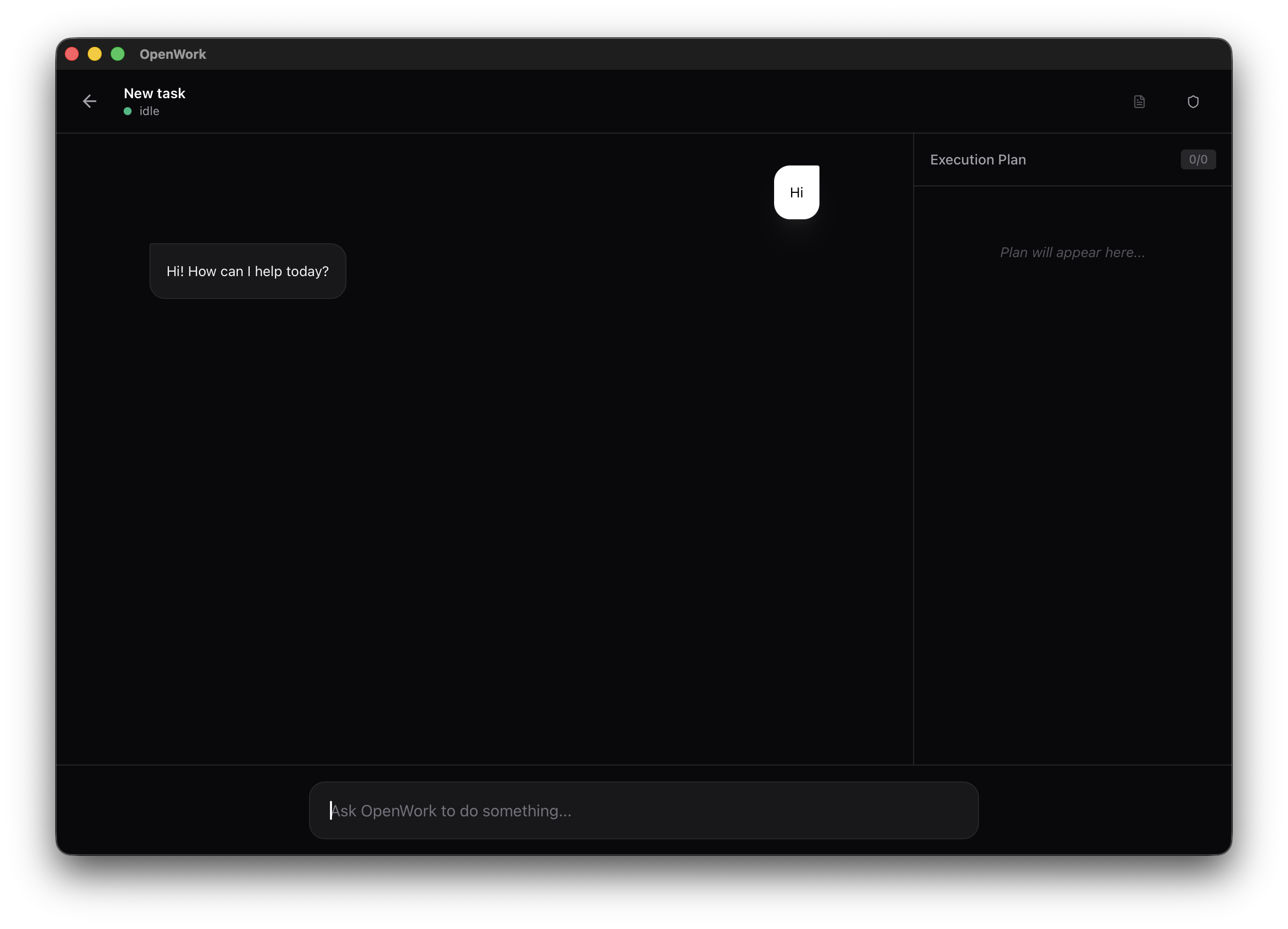
OpenWork approaches AI coworking from an automation-first perspective. It’s considered one of the best because it allows AI agents to orchestrate scripts, tools, and command-line workflows with deterministic execution and predictable results, which many GUI-heavy tools can’t guarantee.
Key features:
CLI tools exposed as agent actions
Self-hosted AI Agent Framework
Explicit permission boundaries
MCP-compatible architecture
Best for:
Users building Autonomous Agent workflows on top of existing scripts and pipelines.
3.Eigent AI : Best Multi-Agent Claude Cowork Alternative
Eigent AI focuses on multi-agent coordination. It’s considered one of the best because it supports complex workflows that require collaboration between multiple autonomous agents, something single-agent tools can’t handle efficiently.
Key features:
Multi-agent planning and task delegation
Support for local and remote LLMs
Configurable agent roles and behaviors
Clear separation between reasoning and execution
Best for:
Users exploring Autonomous Agent systems or agent swarms.
Limitations:
Higher setup complexity compared to single-agent cowork tools.
4.Composio Open Cowork — Best for Tool-Heavy Workflows
Composio’s open cowork project emphasizes integrations across external systems. It’s considered one of the best because it enables AI agents to operate across multiple SaaS platforms like GitHub, Notion, and Slack, making it ideal for workflow-heavy environments.
Key features:
Large set of prebuilt SaaS integrations
Open-source core with extensible connectors
Workflow automation across platforms
Best for:
Users who want a Claude Cowork alternative open source focused on external tools.
Limitations:
Limited native AI file manager capabilities.
5.AionUI — Best Visual AI Cowork Desktop
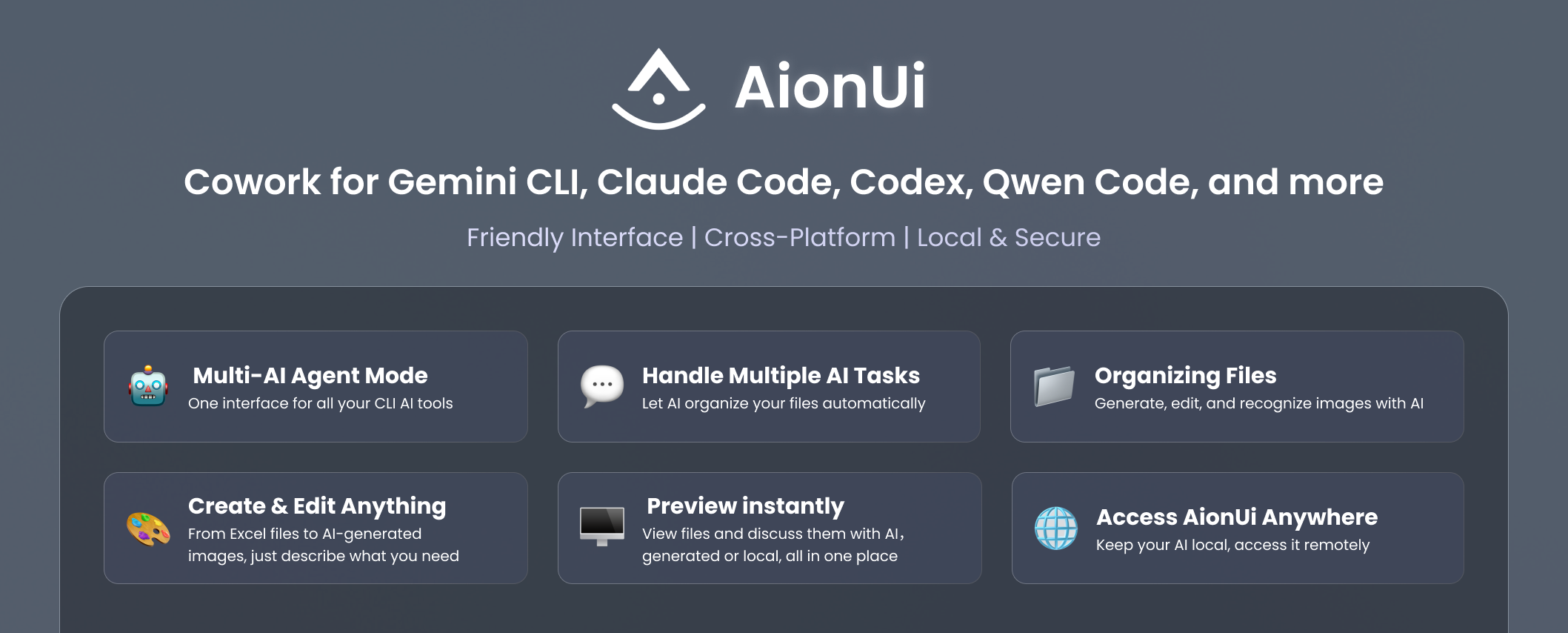
AionUI provides a visual, dashboard-style cowork desktop. It’s considered one of the best because it gives clear visibility into multiple agents and workflows, making monitoring and observability simple for teams or users managing several autonomous agents simultaneously.
AionUI
Key features:
Visual monitoring of agent execution
Multi-model and Multi-Provider orchestration
Collaboration-friendly UI
Best for:
Teams that want visibility into AI workflows rather than low-level control.
Limitations:
Less flexible for headless or automation-only use cases.
Choosing the Right Open-Source Claude Cowork Alternative
When evaluating a Claude Cowork alternative open source, the decision usually comes down to control vs. abstraction:
Local-first AI cowork desktop & file control: Kuse
Automation-driven AI Agent Framework: OpenWork
Multi-agent autonomous systems: Eigent AI
Integration-heavy workflows: Composio Open Cowork
Visual workflow management: AionUI
More Blogs
Top 5 Open-Source Claude Cowork Alternatives in 2026
Explore the top 5 open-source Claude Cowork alternatives in 2026. Compare local execution, BYOK privacy, multi-provider models, file control, and agent autonomy to find the best open-source Claude Cowork alternatives.
.png)
.png)